
Diamond 4Cs Explained: Cut, Clarity, Color, Carat, Fluorescence and Certification.
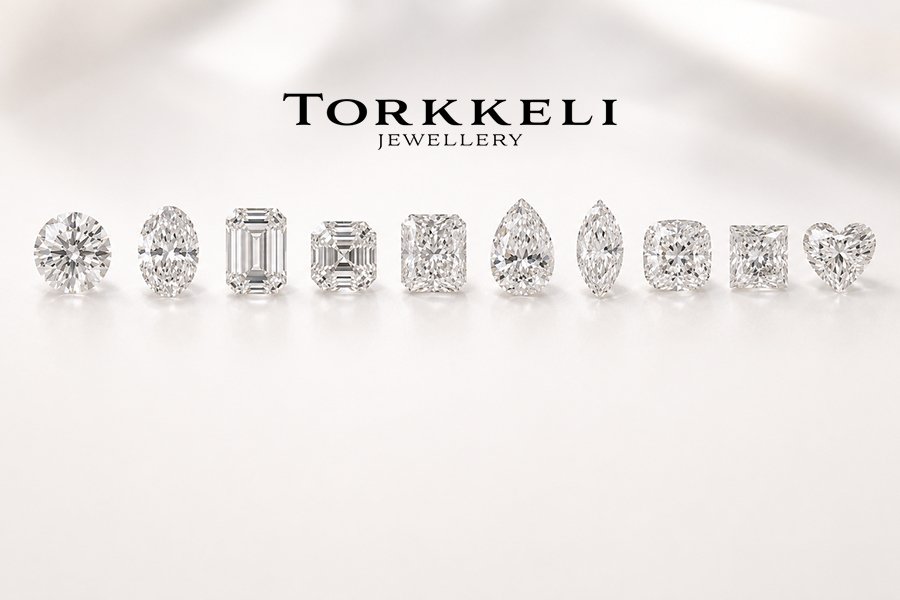
When buying a diamond, you will almost always come across the so-called 4Cs: Carat, Color, Clarity and Cut. These internationally recognised grading criteria are an important part of evaluating a diamond, but they are also surrounded by many misconceptions.
Many buyers end up comparing diamonds purely by letters and numbers. In reality, however, the beauty of a diamond is not determined by a single grade. It comes from the overall balance of its characteristics.
A perfectly colourless D-grade diamond with Flawless clarity is rare, valuable and highly sought after by many collectors and investors. At the same time, it is important to understand that an F-colour, VS2-clarity diamond can look just as beautiful to the naked eye when set in a ring.
Diamond grading is not about one category being automatically “good” and another “bad”. It is about finding the combination that looks right in your jewellery.
Carat: Diamond Weight
Carat refers to the weight of a diamond. One carat equals 0.2 grams.
Carat weight affects the size of a diamond, but it does not determine visual impact on its own. A well-cut diamond can appear significantly larger and more brilliant than a heavier diamond with less successful proportions.
For this reason, carat weight should always be considered together with the diamond’s other characteristics.
Color: Diamond Colour
The colour scale for white diamonds begins at D and continues through to Z.
D-colour diamonds are completely colourless and exceptionally rare. As you move further down the scale, warmer tones become gradually more noticeable.
In practice, the differences between neighbouring colour grades are often much smaller than first-time buyers expect.
For example, D, E, F and G colour diamonds can look very similar in many ring settings unless they are compared directly side by side.
Clarity: Internal and External Characteristics
Clarity describes the internal inclusions and external surface characteristics of a diamond.
Clarity grades range from Flawless through to Included categories.
Many VS1 and VS2 diamonds appear completely clean to the naked eye. Because of this, choosing the highest possible clarity grade does not always create a visible difference in the finished piece of jewellery.
Clarity grading is above all a tool for evaluating and comparing diamonds.
Cut: The Most Important Factor for Brilliance
If one of the 4Cs has the greatest influence on a diamond’s appearance, it is usually the cut.
Cut determines how effectively a diamond returns light to the viewer’s eye. This is what creates brightness, fire and sparkle.
Many people are surprised to learn that an official Cut Grade does not exist for every diamond shape.
GIA, one of the world’s best-known diamond grading laboratories, assigns an official Cut Grade only to round brilliant diamonds. This is because the proportions, facet arrangement and light performance of a round brilliant can be assessed using more standardised criteria.
Fancy-shaped diamonds such as oval, cushion, emerald, princess and pear cuts vary much more in their proportions, and there is no single universal ideal model for them.
This is also one of the reasons why the eye and experience of a knowledgeable goldsmith can be more valuable than simply reading a grading report.
Polish: Surface Finish
Polish describes how carefully the surfaces of a diamond’s facets have been finished.
Good polish allows light to travel through and reflect within the diamond without unnecessary interference. Grades typically range from Excellent to Poor.
In high-quality jewellery diamonds, Excellent and Very Good polish grades are the most commonly seen.
Symmetry: Precision of Facet Alignment
Symmetry refers to how accurately a diamond’s facets are positioned in relation to one another.
Even if a diamond has excellent clarity and colour, poor symmetry can negatively affect its light performance and overall appearance.
Both round and fancy-shaped diamonds receive a symmetry grade, as precise facet placement plays an important role in how the diamond looks.
Fluorescence: What Does It Mean?
Fluorescence refers to the way some diamonds glow under ultraviolet light, most commonly with a blue hue.
The subject attracts a great deal of discussion, but in practice its significance is often overstated.
In most diamonds, faint or medium fluorescence is not visible at all during normal wear. In some cases, it can even make a diamond appear slightly whiter.
Strong fluorescence can, in rare cases, cause a subtle hazy or milky appearance. This is why each diamond should be assessed individually rather than judged by the fluorescence grade alone.
A Diamond Certificate Tells the Facts, but Not the Whole Story
The purpose of a diamond grading report is to provide an independent assessment of the stone’s characteristics.
At Torkkeli Jewellery, all colourless natural diamonds above 0.30 carats are certified by GIA, IGI or HRD.
These are among the world’s best-known diamond grading organisations, using established evaluation methods that make diamond comparison more transparent and reliable.
A certificate provides important technical information, but it does not define the beauty of a diamond on its own.
A Beautiful Diamond Is More Than a Set of Numbers
When choosing a diamond, the goal is not necessarily to find the most perfect combination of letters and numbers.
The goal is to find a diamond that looks right in the finished piece.
Sometimes that may be a D/Flawless diamond. Sometimes it may be an F-colour, VS2-clarity diamond. More often than not, it is the overall combination of appearance, cut, ring design and personal preference that matters most.
At Torkkeli Jewellery, we recommend looking at every diamond as a complete individual stone rather than judging it only by its certificate.
If you have questions about diamond quality, grading or certification, we are always happy to help. Choosing the right diamond does not require a degree in gemmology. It requires trusted expertise and the right guidance.