
How to Choose an Engagement Ring: A Complete Guide
An engagement ring is one of the most meaningful pieces of jewellery you will ever choose. It is worn every day, often for a lifetime, and becomes part of both your personal style and your shared story.
Choosing the right engagement ring can feel overwhelming at first. There are many decisions to make, from the metal and gemstone to the ring setting, proportions and budget.
The good news is that you do not need to know everything before you begin.
A well-designed engagement ring is not about following a single formula. It is about finding the right balance between beauty, comfort, durability and personal meaning.
In this guide, we walk through the most important things to consider when choosing an engagement ring.
Start with the Person Who Will Wear It
Before thinking about diamond grades or ring settings, start with the wearer.
Consider their everyday style, the jewellery they already wear and the kind of life they lead.
Do they prefer minimal and understated jewellery, or do they enjoy more expressive designs? Do they usually wear yellow gold, white metals or rose gold? Is their work hands-on, or do they spend most of the day in an office environment?
These details can help guide the design in a much more meaningful way than trends alone.
A ring should not only look beautiful. It should also feel natural to wear every day.
Set a Realistic Budget
There is no universal rule for how much an engagement ring should cost.
A good budget is simply one that feels comfortable and allows you to create a ring that reflects your priorities.
The final price is influenced by several factors, including:
- The centre stone
- Diamond or gemstone quality
- Carat weight
- Choice of metal
- Ring design
- Number of stones
- Setting technique
- Level of craftsmanship
A bespoke engagement ring can be designed around a wide range of budgets. Knowing the approximate budget from the beginning helps ensure that the design, materials and gemstone choices all work together.
Choose the Right Metal
The metal affects the appearance, durability and long-term maintenance of the ring.
Popular options include:
- Yellow gold
- White gold
- Rose gold
- Platinum
- Palladium
Yellow gold has a warm, timeless appearance. White gold creates a clean and modern look, while rose gold offers a softer and more romantic tone. Platinum is naturally bright, dense and exceptionally durable.
At Torkkeli Jewellery, we use nickel-free precious metal alloys and recycled precious metals.
For white gold rings, we use palladium white gold that does not require rhodium plating. This makes long-term maintenance simpler while preserving the metal’s natural colour.
Choose the Centre Stone
For many engagement rings, the centre stone is the most visually important element.
A diamond remains the classic choice, but coloured gemstones have become increasingly popular as well.
Possible centre stones include:
- Natural diamonds
- Lab-grown diamonds
- Sapphires
- Rubies
- Emeralds
- Morganites
- Aquamarines
- Alexandrites
- Spinels
- Tanzanites
The best choice depends on both appearance and lifestyle.
For a ring that will be worn every day, durability is particularly important. Diamonds, sapphires and rubies are among the most durable options for daily wear.
Softer gemstones can also be used beautifully, but they may require more careful handling.
Natural or Lab-Grown Diamond?
Both natural and lab-grown diamonds are real diamonds with the same fundamental chemical and optical properties.
The key difference is their origin.
Natural diamonds are formed deep within the Earth over millions or billions of years. Lab-grown diamonds are created in controlled conditions using technology that replicates the natural diamond-forming process.
Lab-grown diamonds generally allow you to choose a larger stone within the same budget.
Natural diamonds, on the other hand, are valued for their rarity, natural origin and geological history.
There is no universally right choice. The best option is the one that aligns with your preferences, values and budget.
Understand the Diamond 4Cs
If you are choosing a diamond, you will come across the 4Cs:
- Carat
- Color
- Clarity
- Cut
These grading criteria are useful for comparing diamonds, but they should not be considered in isolation.
Carat refers to the weight of the diamond. Color describes how colourless a white diamond appears. Clarity refers to internal inclusions and surface characteristics. Cut describes how well the diamond has been proportioned and faceted.
For most people, the visual beauty of the diamond matters more than achieving the highest possible grade in every category.
A well-cut F-colour, VS2 diamond can look just as beautiful in a ring as a technically higher-graded stone.
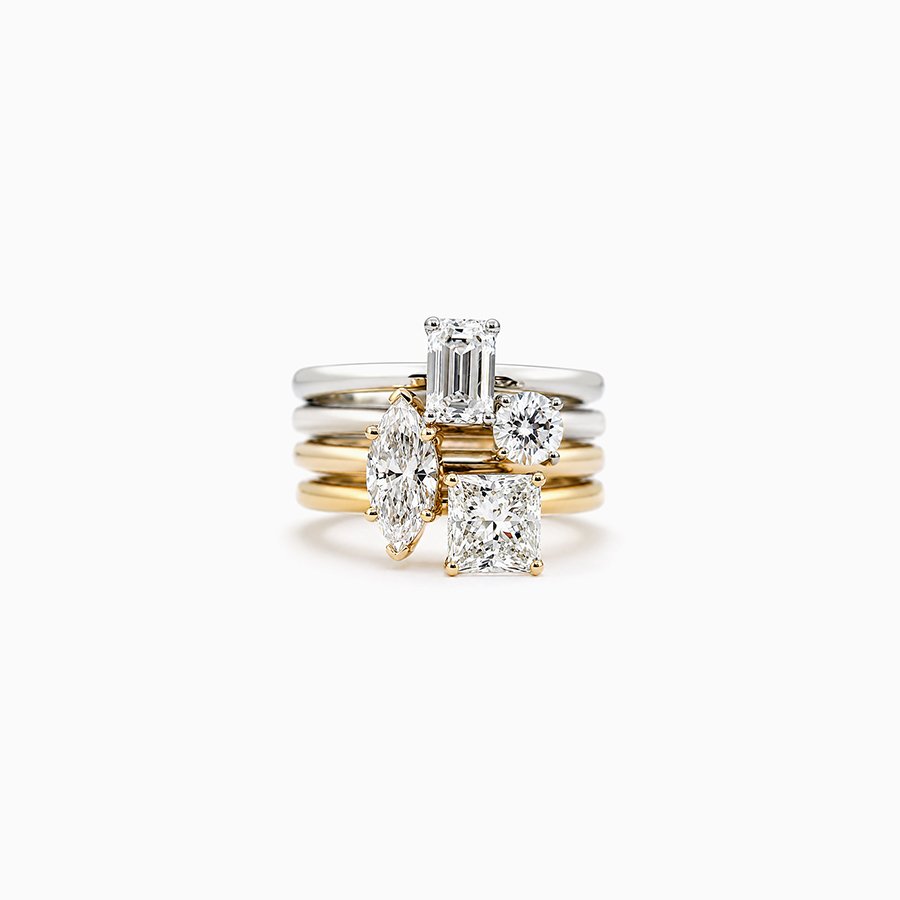
Choose the Diamond Shape
Diamond shape has a major influence on the personality of the ring.
Popular options include:
- Round Brilliant
- Oval
- Emerald
- Cushion
- Radiant
- Pear
- Marquise
- Princess
- Asscher
A round brilliant offers maximum sparkle and timeless appeal.
Oval diamonds have an elegant elongated shape and often appear larger than round diamonds of the same carat weight.
Emerald cuts create a refined, architectural look, while cushion and Asscher cuts have a softer, more vintage-inspired character.
The right diamond shape is often the one that feels most naturally suited to the wearer’s style.
Think About the Setting
The setting determines how the stone is held in place and has a major influence on both appearance and practicality.
Popular engagement ring settings include:
- Solitaire
- Halo
- Pavé
- Bezel
- Three-stone
- Cathedral
- Hidden halo
A solitaire setting highlights the centre stone and creates a timeless appearance.
A halo can make the centre stone appear larger, while a bezel setting offers excellent protection for active everyday wear.
The choice of setting should consider not only aesthetics, but also how secure and practical the ring needs to be.
Consider the Height of the Ring
One detail that is often overlooked is the profile of the ring.
A high-set centre stone can create a dramatic and elegant appearance, but it may catch more easily on clothing or gloves.
A lower-profile setting can feel more practical and comfortable for everyday wear.
The best profile depends on lifestyle, personal preference and whether the ring will later be worn together with a wedding ring.
Think Ahead to the Wedding Ring
It is worth considering the future wedding ring already when choosing the engagement ring.
Some engagement ring designs allow a straight wedding band to sit flush alongside them. Others may require a curved or specially designed wedding ring.
If you would like the two rings to sit closely together, this can be taken into account from the beginning.
Planning the pair as a whole often creates the most balanced result.
How to Find the Right Ring Size
Finding the correct size can feel challenging, especially when the proposal is intended to be a surprise.
One option is to borrow a ring your partner already wears and bring it to a goldsmith for measurement.
A close friend or family member may also be able to help find out the size discreetly.
If the exact size is not known, do not let that prevent you from moving forward. In many cases, the size can be adjusted after the proposal.
At Torkkeli Jewellery, ring size can be adjusted free of charge within one month of purchase when needed.
Ready-Made or Bespoke Engagement Ring?
A ready-made engagement ring can be the right choice when you find a design that feels perfect as it is.
A bespoke engagement ring offers more freedom.
The ring can be designed around a specific gemstone, style, budget or existing jewellery. Proportions, metal, setting and details can all be tailored to the wearer.
For many people, the design process itself becomes an important part of the story.
At Torkkeli Jewellery, we create high-quality 3D models before production, allowing the design to be viewed and refined in detail before the ring is handcrafted.
Do Not Forget Comfort and Durability
An engagement ring should be beautiful, but it also needs to work in everyday life.
Comfort, durability, stone security and maintenance are all part of good design.
A well-made ring should feel balanced on the finger and suit the way it will actually be worn.
This is one of the reasons why professional guidance is valuable. Small technical decisions can make a significant difference over years of daily use.
Give Yourself Enough Time
If you are choosing a bespoke engagement ring, allow enough time for the design and production process.
In general, it is wise to allow approximately one to three months from the beginning of the design process to the finished ring.
Starting early gives more time to compare gemstones, refine the design and make decisions without unnecessary pressure.
The Right Engagement Ring Feels Personal
There is no single perfect engagement ring.
The right ring is the one that suits the person wearing it, reflects their style and works beautifully in everyday life.
Sometimes that means a classic diamond solitaire. Sometimes it means a coloured gemstone, an unusual diamond shape or a completely bespoke design.
What matters most is that the ring feels considered, personal and made to last.
Let’s Design Your Engagement Ring Together
At Torkkeli Jewellery, every engagement ring is handcrafted in Jyväskylä, Finland.
We combine traditional goldsmithing, modern design and years of experience to create rings that are made to be worn and loved for decades.
Whether you already have a clear vision or are only beginning to explore the possibilities, we are happy to help you compare materials, gemstones, styles and budgets.
Together, we can create an engagement ring that feels truly your own.